
Disastrous Injustice
May 5, 2025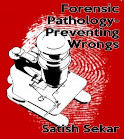
By Satish Sekar © Satish Sekar (May 4th 2025)
“The science of medicine is founded on conjecture, and improved by murder.”
Pioneering Surgeon, Sir Astley Cooper[1]
Beastliness
My most recently published book, Forensic Pathology: Preventing Wrongs, details a gross historical injustice. Once known as the Beastly Profession, its potential was underestimated at best, and often, totally dismissed, due to a terrible lack of understanding of its potential. Pathology played an important role in determining causes of death that had occurred as a result of illnesses for centuries before forensic pathology was able to make important contributions in helping to solve crimes.
It began to come of age in the early 20th Century, largely through the efforts of Professor Sir Bernard Spilsbury, the expert who popularised the science of forensic pathology. Spilsbury had the knack of explaining the science in terms the public could understand. He became the most eminent expert in his field – to some extent his evidence became a form of entertainment, but Spilsbury, for all his faults, turned forensic pathology into the most important forensic science.
Spilsbury’s talents led to him becoming the go to expert and his profession turning from the beastly science into the preeminent forensic science in his field.
A Long Journey
Forensic pathology, however, had a long journey to travel before it could begin to contribute to the best of its abilities – this was several decades before Spilsbury had even been born. At that time, the 18th and 19th Century, cadavers (dead bodies) were required for doctors to understand human anatomy and the way the body worked by dissection and anatomisation.
There was, however, a dire shortage of bodies to dissect. There were very few donations of cadavers to dissect and anatomise, which meant that it required a supply of corpses of people who had no rights. As in life, the obvious supply of people who fitted that bill in death as well, were convicted criminals – after all, there was no right of appeal, especially in capital cases until 1907.
Dissection and Anatomisation – Further Punishment
The Murder Act of 1752 provided a supply of some cadavers of people who had no rights for dissection and anatomisation – people convicted of murder. That occurred by including the post-execution punishment of dissection and anatomisation for those convicted of murder, but only murder, even though there were several other capital offences at the time.
This post-execution punishment was deemed so nasty that some criminals facing execution and then post-execution dissection and anatomisation, chose to commit suicide to avoid that part of their fate. That also reduced the quantity of bodies available for dissection. In short, the supply of corpses to dissect could not keep pace with the demand.
Creative Beastliness
In order to maximise the ability to learn, students needed to have access to sufficient cadavers. That had led to unseemly battles between medical students and relatives and friends of the deceased for the bodies. Despite the Murder Act, the shortage remained a crucial issue, which also created truly beastly professions – resurrectionists would dig up corpses in graveyards, steal the bodies and sell them to doctors or students.
Incredibly, the resurrectionists were respectable compared to the grotesquely beastly alternative. [William] Burke and [William] Hare are just the most notorious of that alternative – serial killers – who realised that the most lucrative supply of bodies was fresh corpses and the freshest source of bodies was to kill people and sell their fresh corpses to doctors and medical students who cared little where the bodies came from.
The ‘Laws’ of Supply and Demand
Burke and Hare were far from the only killers or even serial killers who spotted a lucrative gap in the market. These killers knew that they would have no trouble finding buyers for the corpses that they obtained.
In the first decades of the 19th Century doctors needed to understand human anatomy and develop cures for the many ailments that plagued humans. Many objected to murder and the beastly trades, but as the eminent Sergeant-Surgeon to three 19th Century monarchs (George IV, William IV and Victoria), Sir Astley (later Baron) Cooper never tired of making clear, those who turned their noses up at the doctors who bought corpses didn’t object to the proceeds of these offences.
Without access to corpses, cures for serious illnesses could not be developed. Cooper made it clear that nobody objected to him providing them with cures to diseases – cures he could not develop without access to bodies. Cooper was vociferously unapologetic about how he obtained the bodies he needed.
The cost of progress was very, very high, but as Cooper suggested, there was perhaps an essential price for Cooper’s peers to pay, so we could reap the benefits now, even though gross errors were made along the way.[2]
[1] Sir Astley Cooper (1768-1841) was 72 -years-old when he died. He rose from humble origins, becoming Sergeant-Surgeon to three monarchs – George IV, William IV and Victoria. Cooper became the first of Cooper Baronets of Gadebridge in August 1821 – that Baronetcy later became known as the Paston-Cooper Baronetcy.
Sir Astley Cooper was a pioneering surgeon and anatomist. He lived in times when there was a dire need of bodies to dissect in order to progress understanding of the human body and develop sorely needed cures to tackle many diseases, which had been deadly until the human body and its workings was understood.
Cooper was controversial even for his time because he was unapologetic about where and how he obtained the human cadavers that were required, which included purchasing corpses from notorious resurrectionists. It was said that Cooper had robbed graves of bodies himself. Other sources of cadavers were even more controversial – the market required bodies to dissect and that left a financial opportunity for utterly unscrupulous serial killers who murdered for profit to exploit.
[2] The story of the development of forensic pathology and the high cost to be paid due to gross errors will be detailed in my forthcoming book, The Beastly Science Comes of Age, which will be published next year.
