
By Satish Sekar © Satish Sekar (April 2nd 2020)
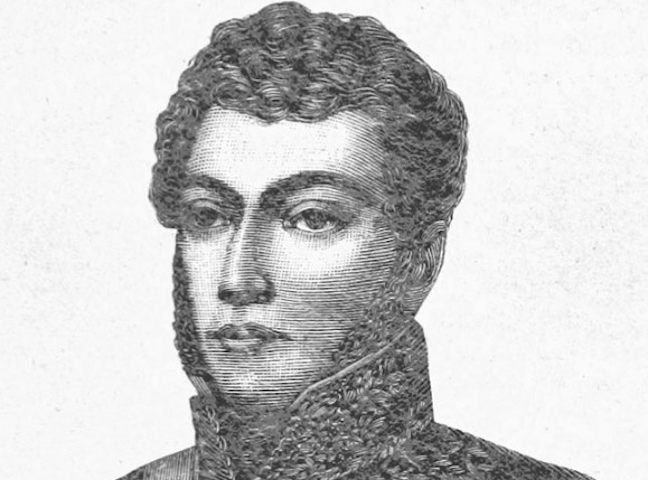
Today is the 250th anniversary of the birth of one of Haiti’s Founding Fathers. Anne-Alexandre Sabés (better known as Pétion). However, the quadroon (what was known as a quarter-caste at the time) as his mother, Ursula, was a mixed-race free woman and his father a white French settler, Pascal Sabès.
Nevertheless, the black blood in him, diluted or not, marked him as a Mulatto – a derogatory term for mixed-race people. This meant that although he was born into limited white privilege, it was made clear that he was not the political or social equal of his father, but he was ‘superior’ to blacks, slave or free.
The young Pétion (Little Man) could not wear the same clothes, work the same jobs, enjoy the same political and social rights as his father, or even bear his name. However, like many of his race and class his education was paid for and he was trained for a future. Pascal would not allow Alexandre to use his surname, but he was not totally abandoned (see above).
It is fitting that Pascal Sabès is now a minor footnote in history, remembered, if at all, only for being Pétion’s father.
When he was approaching his 21st birthday – after he had had a military education in France, a turning point in young Pétion’s life occurred. Champions of mixed-race rights in Saint-Domingue, later Haiti, Vincent Ogé and Jean-Baptiste had tried and failed to secure equality for their race by political means and the by armed struggle. Both Chavannes and Ogé died brutally in February 1791, paying the price for Ogé’s refusal to ally with blacks.
During the Haitian Revolution, future Presidents of Haiti, Pétion and Jean-Pierre Boyer fought under General André Rigaud on both the right and wrong side of history. After defeat in the brutal War of Knives, both Pétion and Boyer returned to Saint-Domingue, believing they were there to secure a share of power.
The deceitful capture and transportation of first Toussaint Louverture and then Rigaud convinced Toussaint’s Generals, Jean-Jacques Dessalines and Henri Christophe and Pétion to bury their differences. Pétion’s decision helped ensure the final victory against the French forces led by the Vicomte de Rochambeau at the Battle of Vertières in November 1803.
Haiti declared independence on January 1st 1804. Dessalines became Emperor later that year and ruled until he was assassinated in October 1807.
A split between Pétion and Christophe led to a civil war and an uneasy peace in 1811 – Christophe ruling the North as King Henry I and Pétion becoming President of the South. As President of Haiti, Pétion was staunch in his support of independence struggles against Spanish colonialism in the Americas. He supported liberation struggles in the USA as well.
There were few more implacable opponents of slavery than Pétion. The only condition he added to the aid that he provided to the ‘Liberator’ Simón José Antonio de la Santísima Trinidad Bolívar y Palacios Ponte-Andrade y Blanco was that in every territory he liberated, Bolívar had to abolish slavery. President Pétion died on March 29th 1818. He was succeeded by Boyer.
